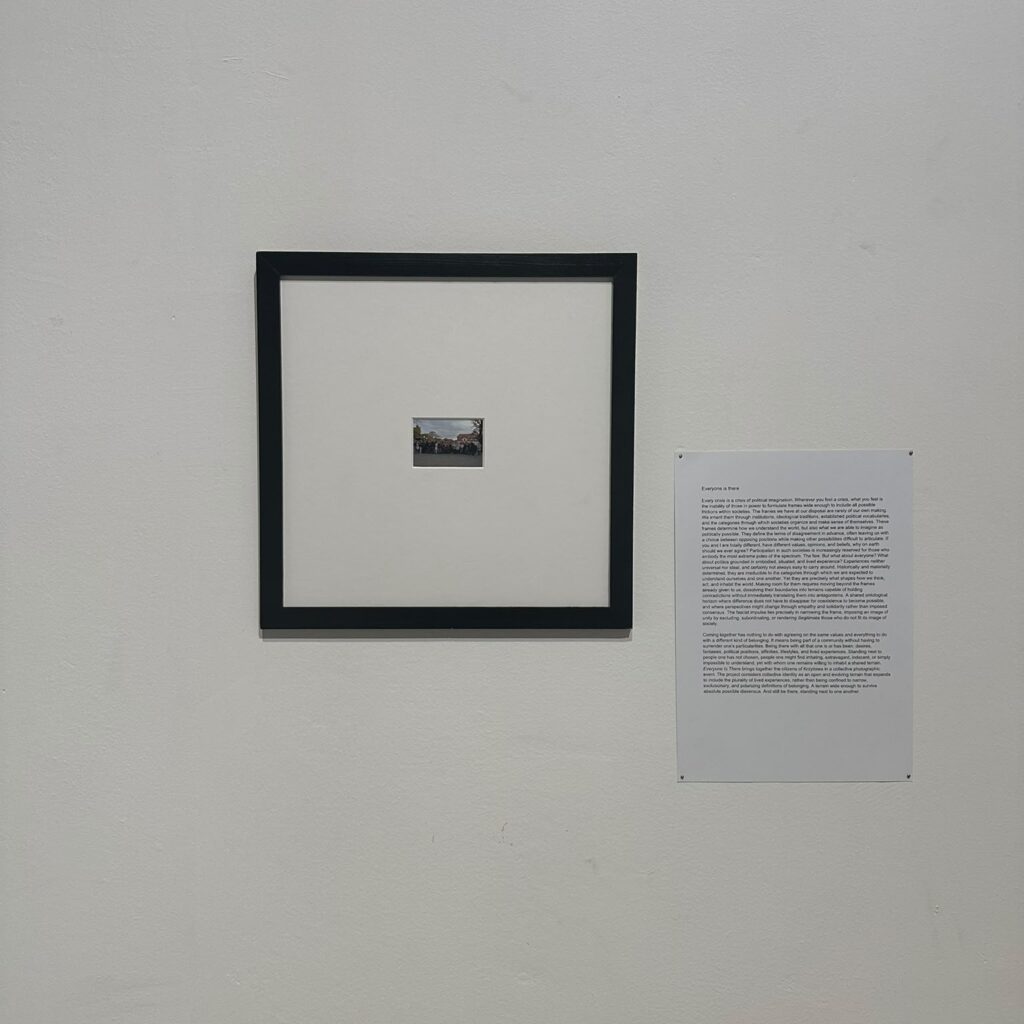
Everyone is There | 2026
Every crisis is a crisis of political imagination. What is felt as crisis, draws roots from power incapable of formulating wide enough frames, in order to include all possible frictions within societies and peoples. The frames we have at our disposal are rarely of our own making. We inherit them through institutions, ideological traditions, established political vocabularies, and the categories through which societies organize and make sense of themselves. These frames determine how we understand the world, but also what we are able to imagine as politically possible. They define the terms of disagreement in advance, often leaving us with a choice between opposing positions while making other possibilities difficult to articulate. If you and I are totally different, have different values, opinions, and beliefs, why on earth should we ever agree? Participation in such societies is increasingly reserved for those who embody the most extreme poles of the spectrum. The few. But what about everyone? What about politics grounded in embodied, situated, and lived experience? Experiences neither universal nor ideal, and certainly not always easy to carry around. Historically and materially determined, they are irreducible to the categories through which we are expected to understand ourselves and one another. Yet they are precisely what shapes how we think, act, and inhabit the world. Making room for them requires moving beyond the frames already given to us, dissolving their boundaries into terrains capable of holding contradictions without immediately translating them into antagonisms. A shared ontological horizon where difference does not have to disappear for coexistence to become possible, and where perspectives might change through empathy and solidarity rather than imposed consensus. The fascist impulse lies precisely in narrowing the frame, imposing an image of unity by excluding, subordinating, or rendering illegitimate those who do not fit its image of society.
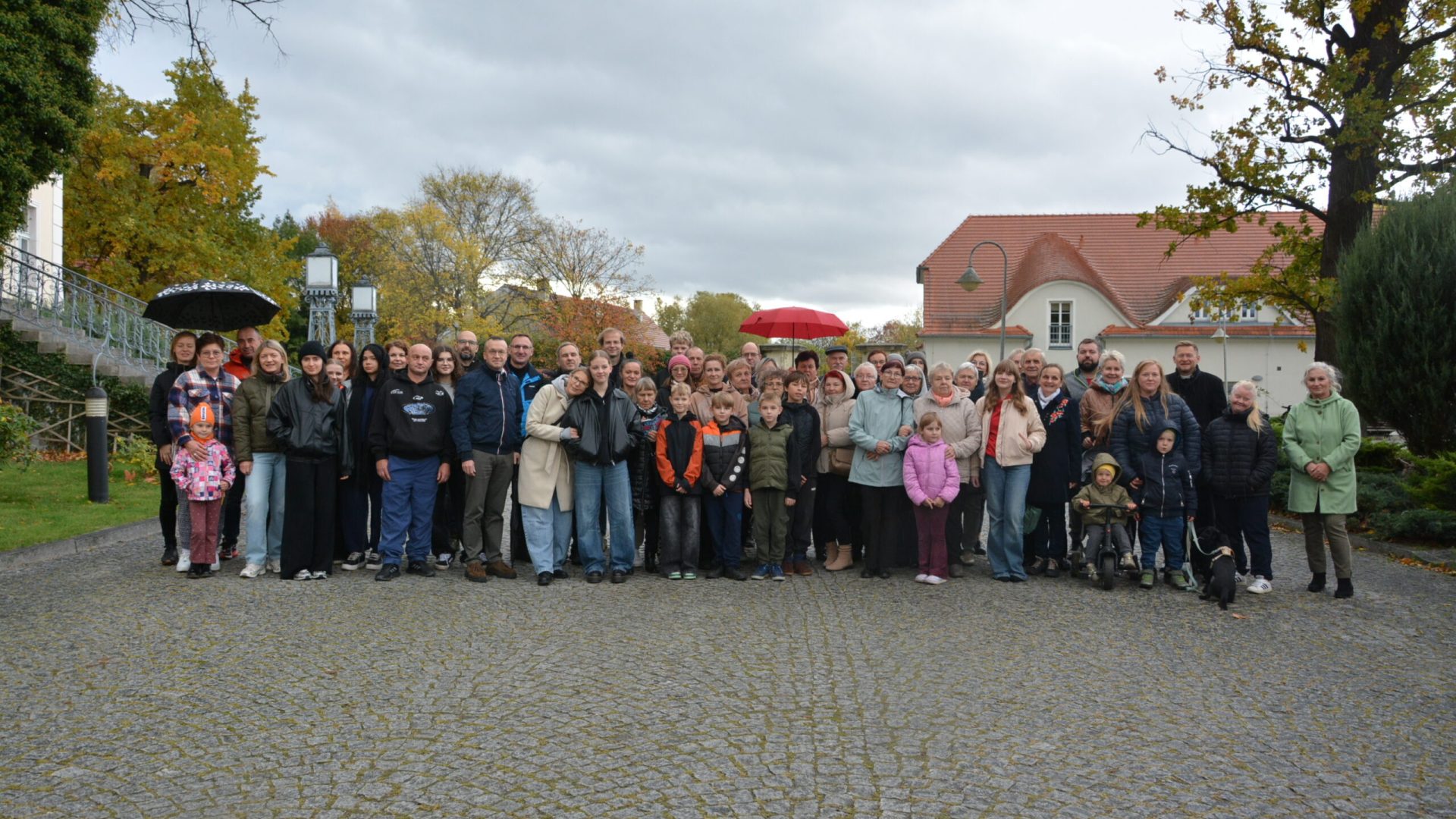
Coming together has nothing to do with agreeing on the same values and everything to do with a different kind of belonging. It means being part of a community without having to surrender one’s particularities. Being there with all that one is or has been: desires, fantasies, political positions, affinities, lifestyles, and lived experiences. Standing next to people one has not chosen, people one might find irritating, extravagant, indecent, or simply impossible to understand, yet with whom one remains willing to inhabit a shared terrain. Everyone Is There brings together all the citizens of Krzyżowa, Poland in a collective photographic event. The project considers collective identity as an open and evolving terrain that expands to include the plurality of lived experiences, rather than being confined to narrow, exclusionary, and polarizing definitions of belonging. A terrain wide enough to survive absolute possible dissensus. And still be there, standing next to one another.